Quick answer
Cleaning removes coffee oils and residue; descaling removes mineral buildup from water. An oily basket or stale-smelling carafe calls for cleaning. Restricted water flow can be a reason to check whether descaling is due—but it does not prove scale is the cause. Your machine may need both jobs, using different products and procedures. Start with its exact model manual, not a universal vinegar recipe. (urnex.com)
1. Cleaning and descaling solve different problems
Coffee leaves oils behind on the surfaces it touches. Over time, that residue can develop an unpleasant smell and affect fresh coffee. Cleaning targets those oils, trapped grounds and other coffee deposits. Descaling targets mineral deposits in the machine’s heated water system. Urnex explicitly distinguishes these two maintenance jobs. (urnex.com)
Think of your brewer as two overlapping routes:
- The coffee-contact route: basket, carafe, lid, spout and, on an espresso machine, its coffee-brewing components.
- The heated-water route: internal components through which brewing water passes.
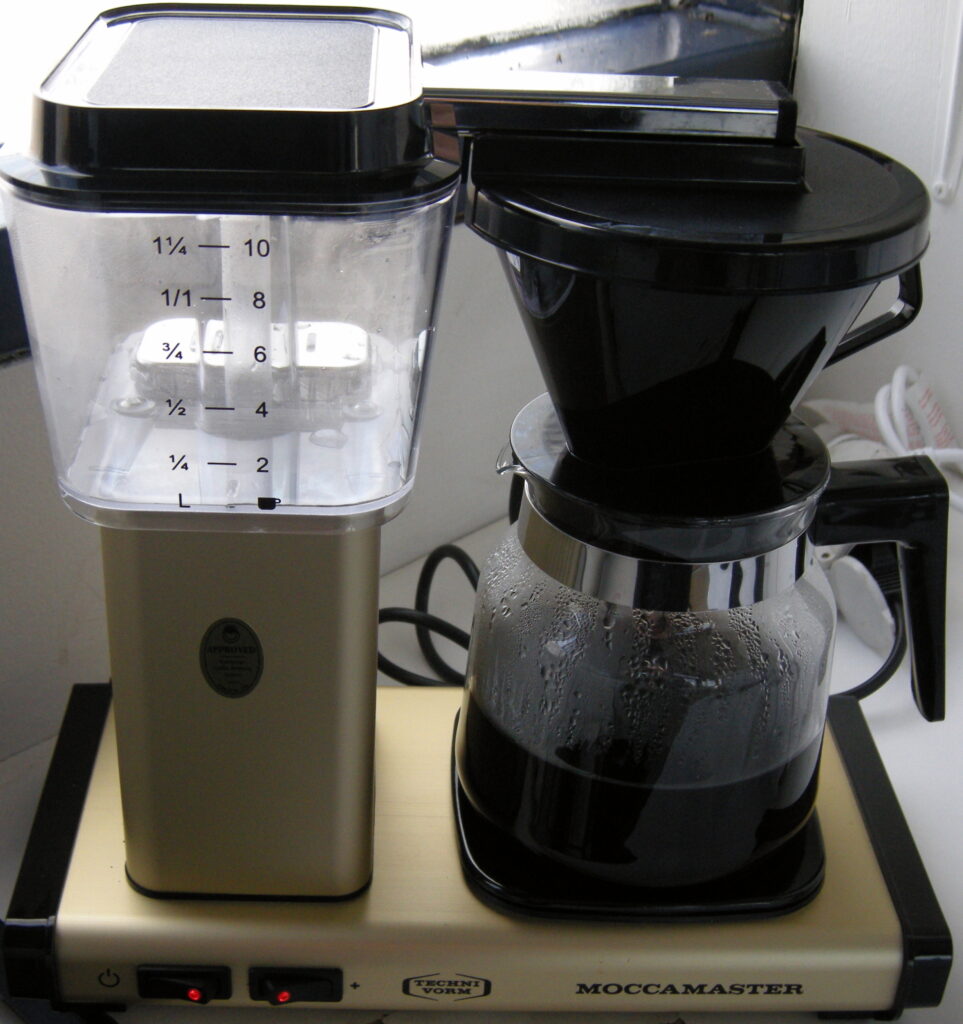
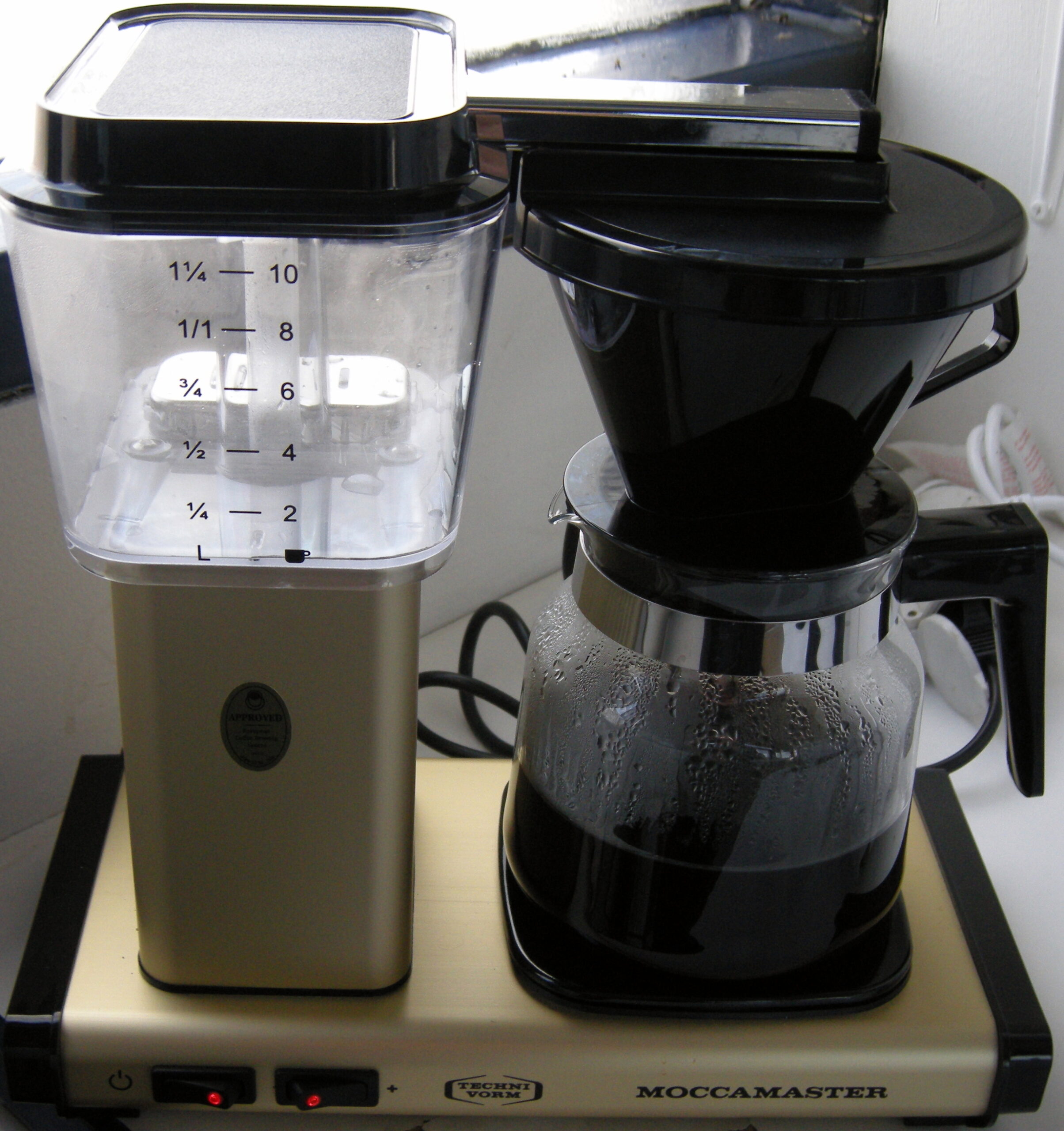
That distinction helps you choose a task, but it is not a disassembly guide. Clean only the parts and pathways covered by the manufacturer’s instructions. For example, Moccamaster distinguishes cleaners for coffee oils from descalers for its boiling element. (support.moccamaster.com)
A successful descaling cycle is therefore not a reason to skip washing a dirty carafe. Equally, a spotless carafe does not establish that the internal water system is free of scale.
Useful habit: Write “cleaned” and “descaled” as separate entries in your maintenance record. Avoid the vague entry “machine serviced,” which does not tell you what was actually done.

2. Use symptoms to choose your first check
Treat symptoms as clues, not diagnoses. Moccamaster says mineral buildup can slow water flow and affect brewing temperature, while Urnex identifies accumulated coffee residue as a source of unpleasant odors and flavor contamination. Neither observation makes every slow or disappointing brew a scale problem. (us.moccamaster.com)
| What you notice | First check | Sensible next action |
|---|---|---|
| Brown residue or an oily film on coffee-contact parts | Inspect the basket, carafe, lid and accessible spout | Clean those parts using their approved method |
| A stale smell from an empty carafe | Check for residue beneath the lid and around the pouring opening | Clean and rinse before judging another brew |
| Brewing has become slower | Review descaling history and the manual’s troubleshooting section | Descale if due; do not assume it is the only possible cause |
| A maintenance light appears | Identify its exact meaning, including whether it flashes | Run the specified task, not whichever cleaner is available |
| Coffee tastes wrong after maintenance | Review the product used and the completed rinse steps | Finish the prescribed rinse procedure before brewing |
| A leak, damaged cord or malfunction appears | Check the manual’s safety instructions | Stop using the machine and seek appropriate service |
The first three rows reflect the manufacturers’ distinction between coffee residue and mineral buildup. Maintenance indicators and safety responses remain model-specific. (urnex.com)
Before changing anything, record what happened: Was the brewer slow throughout, or did coffee collect in the basket? Was the smell in the carafe before brewing? A precise observation gives you a better starting point than “the coffee maker needs cleaning.”
3. Start with removable parts—not a chemical cycle
For routine hand-cleaning, switch the machine off, unplug it and let it cool before removing parts. Do not immerse the powered base. Moccamaster’s manual gives these precautions and directs owners to hand-wash the carafe and brew basket with mild dishwashing detergent after each use, then rinse thoroughly. Its carafes are not dishwasher-safe. (support.moccamaster.com)
Make a short parts checklist for your own brewer:
- Identify what is removable. Use the manual rather than pulling apart a lid or valve by force.
- Check the washing method for each part. “Removable” is not the same as “dishwasher-safe.”
- Inspect accessible corners and openings. Note where residue remains after your normal wash.
- Rinse and dry as directed.
- Reassemble before running any powered maintenance program.
Keep hand-washing separate from internal cleaning. Permission to use dishwashing detergent on a removable carafe is not permission to pour it into the reservoir. Moccamaster limits reservoir contents to water or recommended cleaning products. (support.moccamaster.com)
If residue remains, look for an approved soaking or coffee-cleaner procedure. Do not automatically increase concentration, extend soaking overnight or substitute an abrasive tool.

4. Check compatibility before buying or pouring
Choose the product by job, machine and application point, not just by brand name.
Before use, confirm:
- Is it a coffee-oil cleaner or a mineral descaler?
- Does your machine maker approve that product or product type?
- Does it belong in the reservoir, on removable parts or in a designated cleaning position?
- What dose, water volume and temperature are specified?
- What rinsing steps complete the treatment?
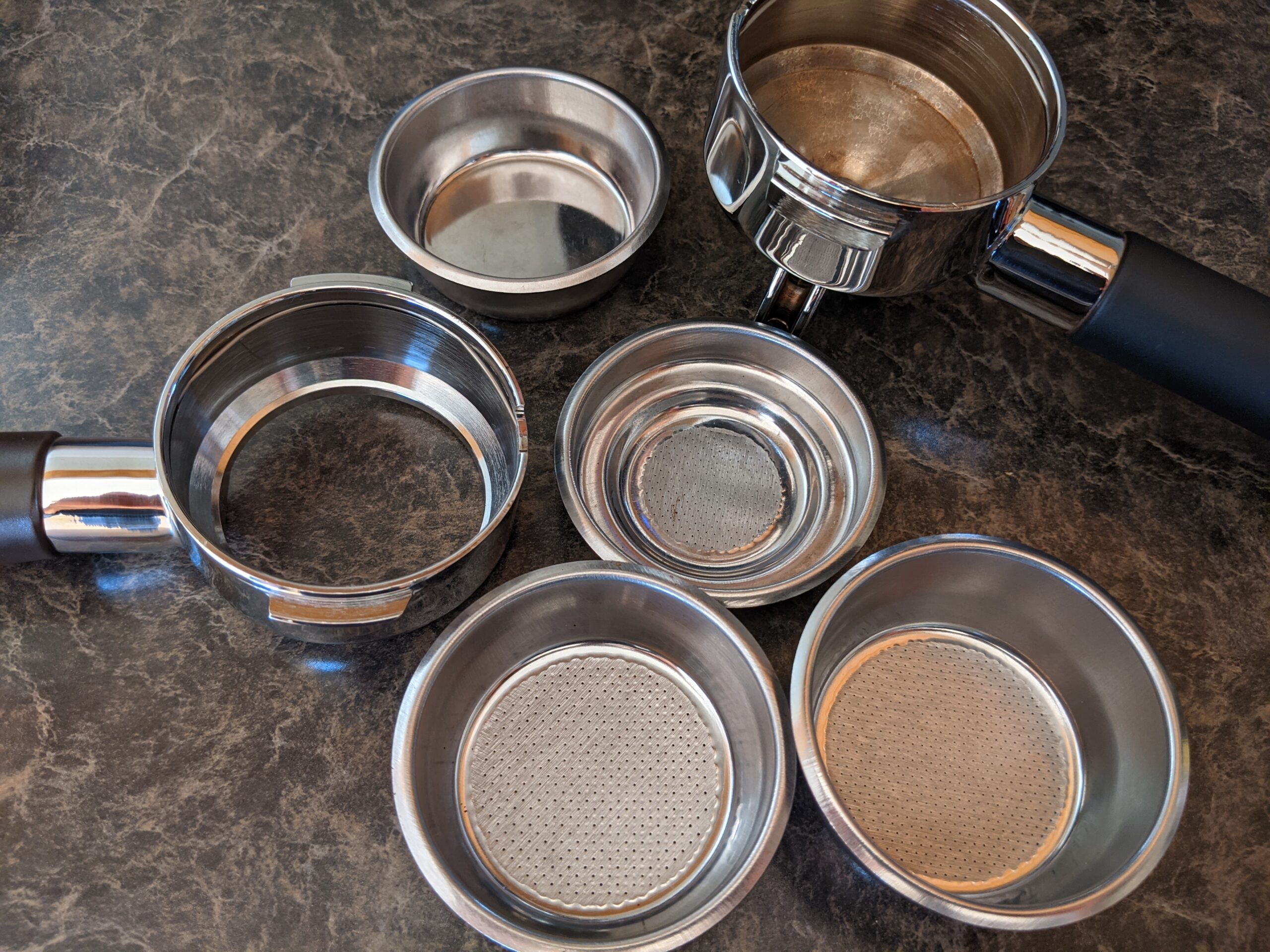
The application point matters. Urnex Coffee Machine Cleaning Powder has reservoir-based instructions. The Breville example below uses a cleaning tablet in the portafilter for a different procedure. Those instructions are not interchangeable. (urnex.com)
For a concrete label-reading example, Urnex directs users of its Coffee Machine Cleaning Powder to dissolve one packet in 32 US fluid ounces of warm water—about 950 mL—run the solution through, discard it, rinse the parts and complete two clean-water brews. That is a product-specific instruction, not approval for every coffee maker. (urnex.com)
Do not mix maintenance products or combine household ingredients to create a stronger treatment. If the machine instructions and product directions do not clearly fit together, ask the manufacturer before proceeding.
Vinegar is not a universal fallback: Moccamaster specifically does not recommend it for descaling its brewers. (support.moccamaster.com)
5. Two machines show why one schedule does not fit all
These are documentation examples, not hands-on test results or complete operating procedures.
Moccamaster KBGV Select: Use Moccamaster USA’s brewer manual alongside the model’s quick guide. The brewer manual specifies descaling every 100 cycles, or at least every three months. Its support guidance says harder water may require more frequent descaling and lists separate cleaner and descaler products. (support.moccamaster.com)
Breville Barista Express BES870XL/A: In the cited US manual, a flashing CLEAN/DESCALE light calls for the cleaning cycle; a continuously illuminated light calls for descaling. Cleaning uses the supplied disc and one cleaning tablet in the portafilter. Descaling uses Breville descaling powder in the water tank. (breville.com)
The lesson is not to copy either procedure onto another brewer. It is to check whether your machine uses a calendar, a brew count, an indicator—or a combination.
Worked planning example: Suppose your applicable Moccamaster instructions specify 100 cycles or three months, and you brew twice daily. You would reach 100 cycles in 50 days: 100 ÷ 2. At one brew daily, you would reach the three-month checkpoint before accumulating 100 cycles. These are illustrative calculations, not measured usage or a substitute for a shorter hard-water interval.
A reminder based only on “every few months” can therefore miss the brew-count checkpoint in a busy household.
6. Finish the rinsing procedure before making coffee
Rinsing is part of the treatment, not an optional finishing touch.
Keep the instructions open until the final water-only stage is complete. Record each required rinse as you perform it rather than relying on memory.
The examples show why rinse counts should not be generalized:
- Urnex Coffee Machine Cleaning Powder: two clean-water brews after treatment and rinsing the parts. (urnex.com)
- Moccamaster brewer manual: two full reservoirs after descaling. Its separate online descaling guide specifies three clean-water cycles. (support.moccamaster.com)
- Breville BES870XL/A: its descaling rinse repeats the specified coffee, steam and hot-water pathway steps with fresh water. (breville.com)
The Moccamaster documents differ. Do not silently treat their rinse counts as identical; consult the instructions applicable to your brewer and product, and ask support if clarification is needed.
Moccamaster’s online guide also says to dissolve descaling powder separately and let a hot solution cool before adding it to the reservoir. Do not assume water temperature is unimportant. (us.moccamaster.com)
Final check: Confirm the correct product was used, all prescribed stages finished and removable parts were rinsed and reinstalled. Do not taste maintenance solution to check whether rinsing is complete.
7. Keep a maintenance log—and know when to stop
A useful log can fit on a card beside the filters or in a phone note. Start with this template:
| Field | What to record |
|---|---|
| Machine | Exact model, market and manual version |
| Observation | Residue, odor, slower flow or exact light behavior |
| Task | Removable-part cleaning, internal cleaning or descaling |
| Product | Full name and format |
| Preparation | Label dose and water volume actually used |
| Completion | Program finished and required rinses completed |
| Next checkpoint | Date, cycle count or manufacturer indicator |
Add a brief follow-up: “Carafe residue removed” is useful; “machine fixed” is too broad unless the original problem has actually been checked.
Avoid three common mistakes:
- Logging descaling as cleaning: keep separate records for separate jobs.
- Repeating stronger treatments without reassessing: return to the troubleshooting instructions if the original symptom remains.
- Treating a maintenance reminder as permission to repair: external care and internal repair are different tasks.
Stop if the machine leaks, has a damaged cord or otherwise malfunctions. Moccamaster’s manual directs owners to authorized service and states that there are no user-serviceable parts beneath its bottom panel. Do not open a brewer to scrape scale or investigate internal electrical faults. (support.moccamaster.com)
The practical rule is simple: identify the deposit, choose the approved task, finish the rinse and record what you did. If the problem remains, investigate it rather than assuming the machine needs more chemicals.